
Didn’t Wipe Off Wood Stain? Check It Before Adding Finish
Forgot to wipe off wood stain? Check sticky residue, remove excess oil-based stain, and know when to stop before coating a hardwood floor.
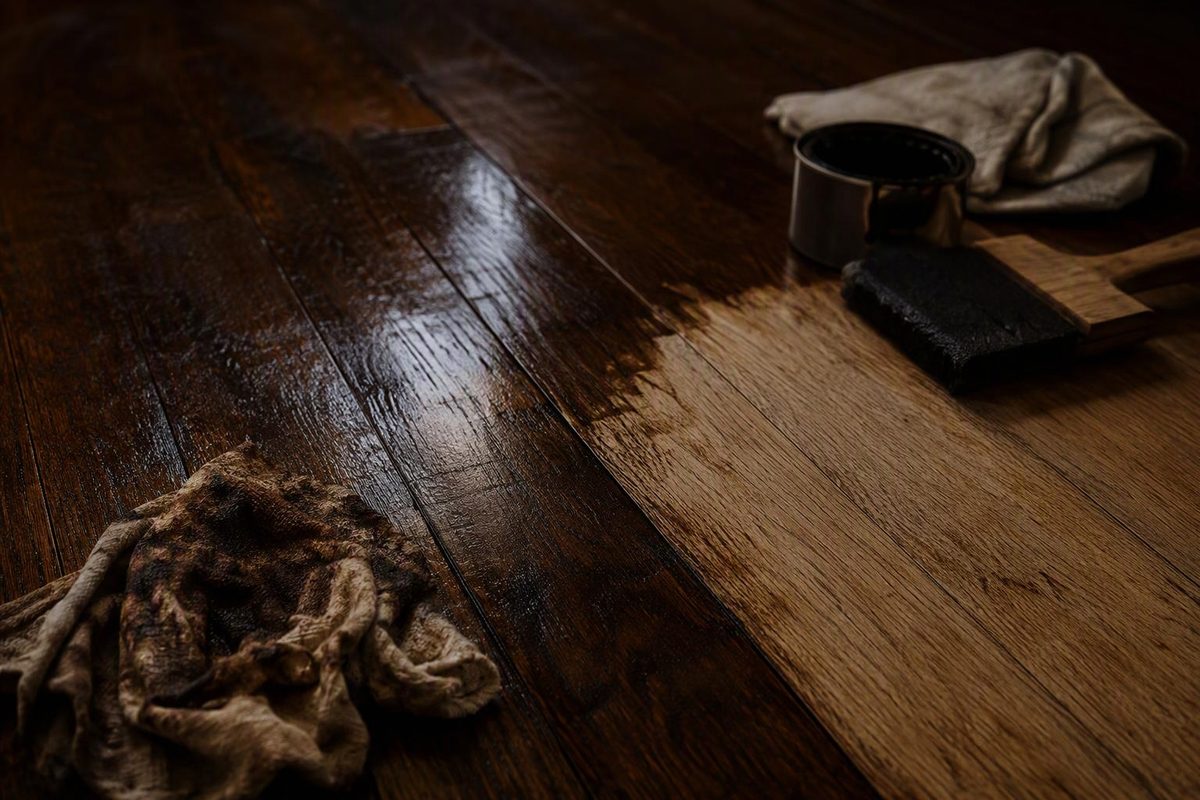
If you forgot to wipe off a penetrating wood stain, don’t apply polyurethane yet. Unabsorbed stain can remain tacky, leave uneven color, and interfere with the clear finish’s adhesion. The fix depends on the product and whether the excess is still wet, tacky, or hardened. Minwax’s troubleshooting guidance describes the missed-wipe problem and remedies for tacky excess.
On a hardwood floor, treat this first as a stain-application problem. Sticky color alone is not evidence of subfloor damage.
First, identify the product and the surface condition
Find the can or receipt. Check the exact product name, whether it is oil- or water-based, its wiping instructions, and whether it is approved for floors.
- Penetrating oil-based stain: Excess generally needs wiping away. Minwax Wood Finish, for example, is intended for bare or stripped wood, including hardwood floors, and specifies removing excess stain. Product directions
- Water-based stain: Do not automatically use mineral spirits. Follow that manufacturer’s correction procedure. General Finishes instructs users to wipe excess promptly and correct fresh lap marks immediately by rewetting the working area with stain and wiping again. That is not a promise that dried residue will respond the same way. Water-based application instructions
- Gel stain or a stain-and-finish combination: Read its own directions rather than assuming the penetrating-stain method applies. Minwax PolyShades, for example, combines stain and polyurethane and is brushed on in thin coats that are left to dry. This illustrates a different application method, not a recommendation to use it on floors. PolyShades directions
For an uncoated penetrating stain that required wiping, distinguish the condition:
| What you observe | What to do next |
|---|---|
| Stain is still wet and movable | Wipe away excess now, following the product directions. |
| Surface remains sticky or smears after the stated drying period | Test an approved excess-removal method before coating. |
| Dry surface has a raised, shiny, or heavy-looking layer | Do not assume it is safe to coat simply because it feels dry. Ask the manufacturer about removal. |
| Polyurethane or another clear finish is already on top | Stop. The exposed-stain wiping repair is no longer the right procedure. |
Tackiness alone does not prove that excess remains: cold conditions, humidity, and poor ventilation can also delay drying. But a known missed wipe needs attention. Minwax warns that allowing unabsorbed stain to dry on the surface can cause peeling and prevent clear-finish adhesion. Drying guidance · Staining do’s and don’ts
Remove tacky excess oil-based stain in a small test area
Before using solvent, provide adequate ventilation, keep heat and flames away, and follow the stain and solvent safety instructions. Stain-soaked rags can spontaneously catch fire if improperly discarded. Do not leave them piled up or put them straight into ordinary trash. Minwax Wood Finish directs users to place contaminated rags and waste immediately in a sealed, water-filled metal container and dispose of them according to local fire regulations. Safety directions
For an uncoated oil-based stain whose manufacturer permits this repair:
- Choose an inconspicuous test area. Do not start by treating the whole room.
- Dampen a clean cloth with mineral spirits. Use the cloth to work away the tacky excess; do not pour solvent across the floor.
- Wipe away loosened residue with a clean cloth. Change cloths as they become loaded so you are removing excess rather than spreading it.
- Let the test dry and inspect the color. If it leaves an obvious light patch, smears without clearing, or fails to remove the residue, stop before expanding the repair.
Minwax’s alternative is to apply fresh stain, wait a couple of minutes for it to soften the old tacky excess, then rub away the excess with a cloth. This is a removal step—not a reason to leave another heavy coat behind. Use it only when appropriate for your exact stain. Repair guidance
When wiping is not enough
Do not try to sand a sticky floor as your first remedy. Nor should you sand isolated stained patches casually: removing color locally can create areas that are difficult to blend. Minwax Wood Finish says not to sand between stain coats; General Finishes also warns that sanding can remove an area of stain that cannot be reblended. Minwax directions · General Finishes guidance
If residue has hardened, the test leaves unacceptable color differences, or a clear coat already covers the problem, get product-specific advice from the manufacturer or a floor refinisher. Removal and restaining may be necessary; establish that scope before committing the floor to sanding.
Also check whether the stain went over old finish. Ordinary penetrating stain needs absorbent bare wood. Minwax identifies an existing clear finish as a reason stain cannot absorb and advises removing that finish before restaining. Troubleshooting guidance
Before applying the clear finish
Proceed only when the excess is gone, the color is acceptable, and the stain has dried fully for the selected finish system. Waiting longer does not substitute for removing a heavy surface deposit.
Check the system’s coating window as well as its minimum drying time. Bona DriFast’s May 2026 instructions require removing excess after 1–3 minutes, drying thoroughly, and applying sealer or finish within 48 hours after application. Those are Bona-specific requirements, not a schedule for other stains. If your repair runs beyond the specified window, ask the manufacturer how to proceed. Bona DriFast technical data sheet