
Does Stain Color Darken Over Time? Check the Wood and Topcoat
Stained hardwood can darken, fade or turn amber. Learn which layer changes, how to check rug outlines, and when waiting won't fix the color.
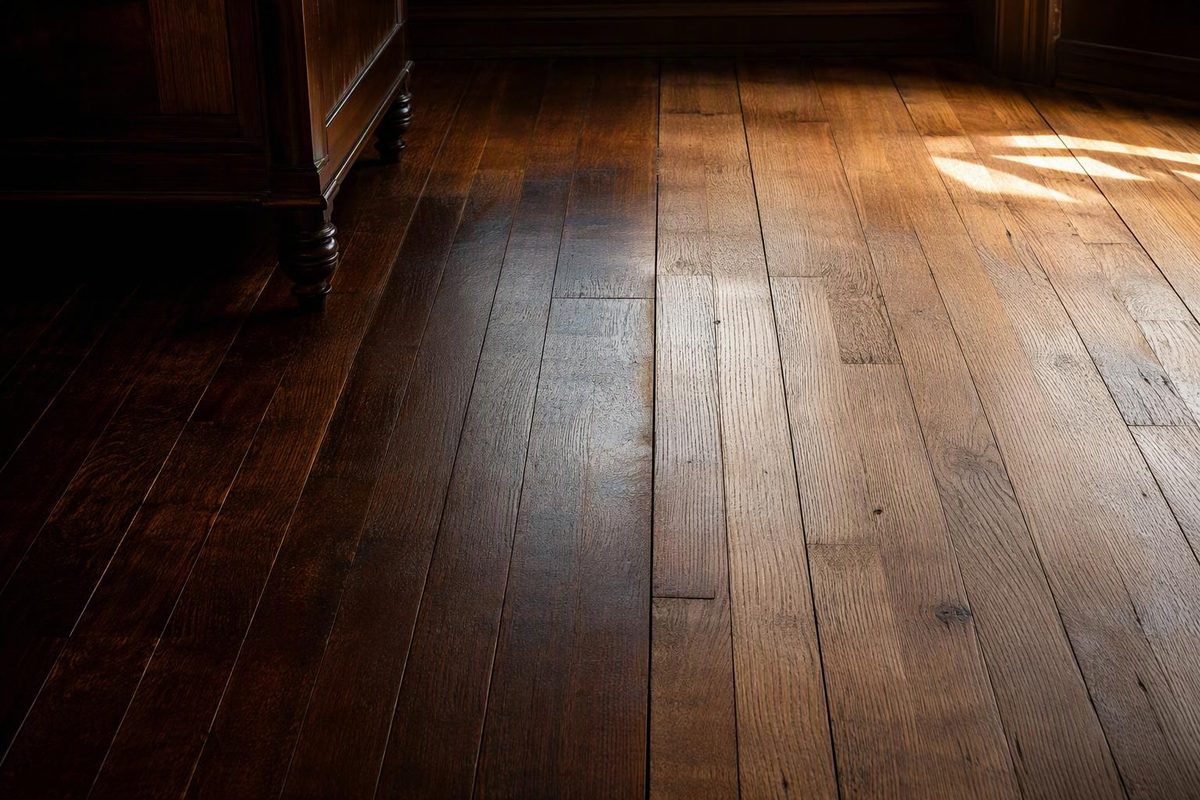
A stained hardwood floor can darken over time, but that does not mean the stain itself is getting darker. The visible color comes from the wood, the stain and the protective finish. Each can change differently: wood may darken or lighten, some colorants fade, and certain topcoats become more amber. AHF Products’ guidance on floor patina explains that both natural wood aging and finish ambering affect the result.
If a newly stained floor looks too light, do not count on age to bring it to the intended shade. If an older floor looks darker, identify the changing layer before choosing a treatment.
What actually changes with age?
The wood beneath the stain
Wood reacts to light and oxygen even after it has been installed and finished. The direction of change depends on the species. American cherry tends to become deeper reddish-brown; natural walnut tends to become lighter and develop honey tones. These are changes in the wood—not proof that the applied stain has changed. Sheoga Hardwood Flooring describes cherry’s darkening and walnut’s lightening; AHF Products also describes walnut’s developing honey color.
Stain can camouflage some natural color change, but it does not make the wood stop aging. AHF notes that unstained floors may show the change more readily than stained floors.
The stain colorant
Wood stains can use pigments or dyes; the distinction is separate from whether the carrier is oil- or water-based. Fine Woodworking’s explanation of stains describes suspended pigments and dissolved dyes.
Some colorants lose color rather than deepen. Sheoga specifically warns that aniline dyes can fade significantly over time. That is not a prediction for every modern stain formula, but it is a reason not to assume that “older” always means “darker.” Ask the stain manufacturer about the particular product’s color stability, especially in a sunlit room.
The protective topcoat
An oil-based finish can become more amber with age, making the stained floor look warmer or darker even if the stain remains relatively stable. Sheoga’s patina guidance identifies oil-based finishes as a common source of this change.
A non-yellowing floor finish reduces that particular source of change. For example, Bona describes its clear waterborne floor finishes as non-yellowing. That describes the coating, not a guarantee that the underlying wood or stain will keep exactly the same color.
Check the pattern before trying to fix it
Start with observations, not sanding:
- Compare an exposed area with an area beneath a rug or movable piece of furniture. A sharp outline is consistent with unequal light exposure, although incompatible rug pads can also discolor a finish. The outline alone does not identify which layer changed.
- Check where the change occurs. Gradual differences across sunny and shaded areas fit light-related aging better than a new isolated patch near a spill. Sheoga also identifies urine, cleaning chemicals and rug-pad incompatibility as possible discoloration causes.
- Find the original product names. The wood species, stain, sealer and finish are more useful than a stain color name alone. A brown stain over cherry is not expected to age exactly like the same color over walnut.
These checks follow the different causes described in Sheoga’s color-change guidance. They help narrow the cause; they do not prove it from appearance alone.
Will waiting help—and what can you control?
There is no reliable universal timeline for stained-floor darkening. AHF says the most dramatic natural wood changes occur within the first six months after installation, but the rate depends on species, light intensity and other conditions. That is not a six-month deadline for a stain to reach its “true” color.
Use blinds or suitable UV-filtering window treatments to limit direct sunlight, and periodically reposition rugs and furniture where practical. Follow the flooring manufacturer’s cleaning instructions. These measures can reduce uneven exposure and avoid preventable discoloration; they cannot freeze natural wood aging. Sheoga recommends these exposure and maintenance measures.
Do not apply more stain or another clear coat simply because the floor has changed color. A clear recoat does not remove faded stain or aged wood underneath it. If the finish itself needs renewal, first work through the checks before screening and recoating. For a true color correction, have a refinisher assess the affected layer and whether the floor can safely tolerate the necessary sanding. Bona’s refinishing guidance identifies a new stain color as a reason to sand and refinish, and calls for a contractor to assess the remaining wear layer first.