
Plan Your Hardwood Floor Refinishing Timeline
Most hardwood refinishing takes 3–5 working days. Compare sanding, stain, finish and cure timelines, including when you can walk or replace rugs.
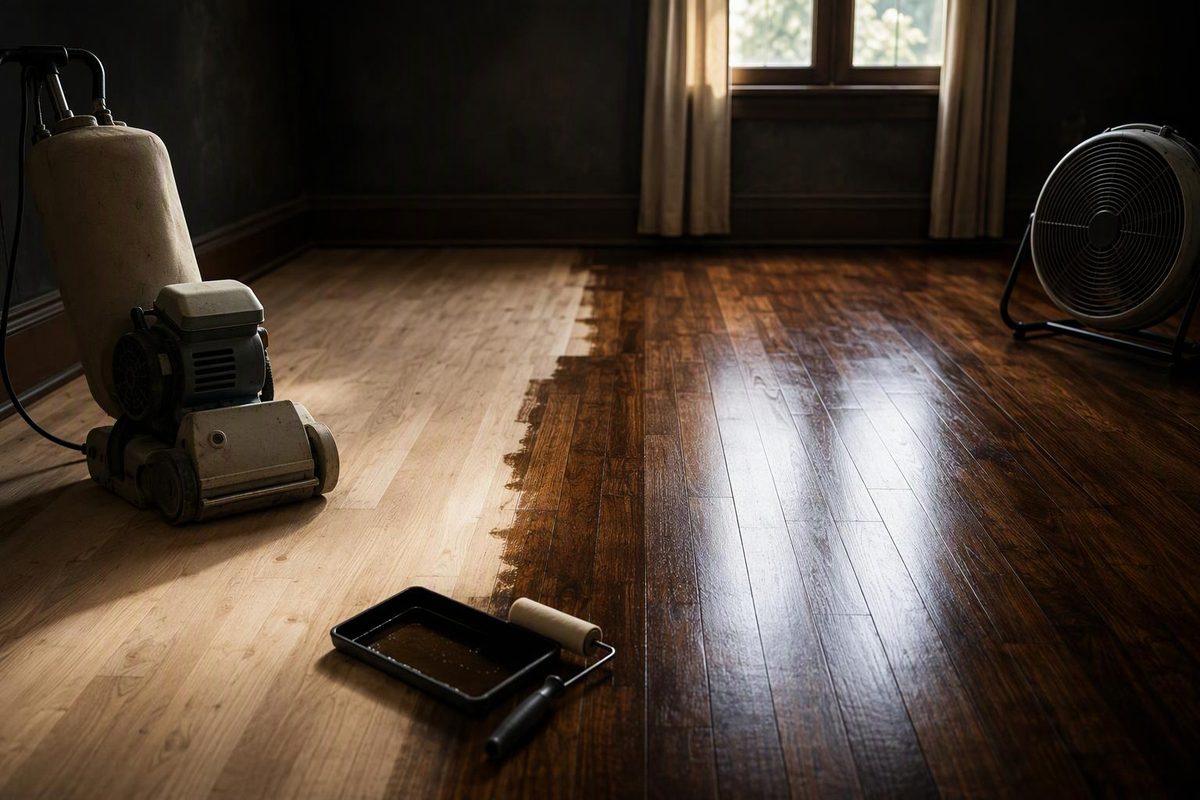
Plan on 3–5 working days for a typical professional hardwood-floor refinishing project. A DIY job may take 5–7 days, especially while learning the sanding equipment. These are planning ranges, not guarantees, and they do not necessarily include the finish’s complete cure time. One Michigan flooring supplier describes a typical schedule as one day for sanding, one day for staining and drying, and two or three days for finish coats and their drying intervals (Quality Hardwoods of Michigan).
Choose who is doing the work and the exact finish; the tool separates the work window from post-coat restrictions.
Refinishing Time Check
Select a work method and finish example. The result keeps the work period separate from curing restrictions.
Keep three milestones separate:
- Work complete: Sanding, optional stain and all planned finish coats are done.
- Floor passable: The finish manufacturer permits light foot traffic.
- Finish cured: The coating has reached its stated cure point and can accept rugs or normal use as directed.
Depending on the product, the last two milestones may be days or weeks apart.
A Typical Refinishing Schedule Takes Three to Five Days
| Stage | Typical Planning Allowance |
|---|---|
| Empty rooms, set fasteners and make minor repairs | Several hours to 1 day |
| Sand field, edges and corners | 1–2 days |
| Apply and dry stain, if used | Often overnight |
| Apply sealer and finish coats | 1–3 days; some systems take longer |
| Wait before light traffic | Several hours to 24 hours in cited examples |
| Full cure and return of rugs | Product-specific; about 3–30 days in cited examples |
A small, open room in good condition may move faster. Stairs, closets, numerous doorways, dark stain, board repairs and a whole occupied house tend to slow the work.
Day 1 Covers Preparation and Sanding
Furniture, rugs and removable doors must be out of the work area before sanding. The crew then sets protruding fasteners, deals with repairable boards, sands the main field, edges the perimeter and hand-sands places the machines cannot reach.
Square footage alone does not determine the duration. Several open rooms can be more efficient than a smaller area broken up by halls, closets and stairs.
Sanding should not start merely because the boards look worn. Active leaks, damp subflooring, cupping, soft boards or continuing movement need diagnosis first. Sanding a moisture-distorted floor too soon can flatten temporarily raised edges without correcting the cause.
Start with a repair-or-replace diagnosis, and allow separate drying time after a leak or flood. That drying period is not part of a normal refinishing schedule.
Day 2 Includes Final Preparation and Optional Stain
After final sanding and dust removal, stain adds application time and a drying interval. For example, DuraSeal directs users of its Premium Polyurethane+ system to let stain dry for 24 hours before applying the finish (DuraSeal). Temperature, humidity, airflow and application thickness can extend drying.
Approve the color on the actual sanded floor before staining the whole room. A late color change can require more sanding and reset the schedule. See how to test hardwood stain colors before committing.
Days 3–5 Usually Cover Sealer and Finish Coats
Coating time depends on the data sheet for the exact product, the number of coats and room conditions—not just whether the finish is described as water- or oil-based.
As a fast waterborne example, Bona Traffic HD lists 2–3 hours of drying time, walking after 24 hours and full cure after approximately three days. Its current data sheet also says high humidity or low temperature extends drying (Bona Traffic HD technical data sheet).
As an oil-based example, DuraSeal Premium Polyurethane+ lists an 8-hour recoat time, overnight foot traffic, return to service after three days and full cure after 30 days at 77°F and 50% relative humidity. Its directions also require at least four days before an optional third finish coat, so that coating schedule would exceed a simple 3–5-day plan (DuraSeal).
These are product examples, not universal waiting periods. Follow the label and current technical data sheet for the finish actually being applied.
Walking, Furniture and Rugs Have Different Wait Times
Get four separate times in writing from the installer or product instructions:
- stocking-foot traffic;
- normal shoes and pets;
- furniture replacement; and
- area rugs and other floor coverings.
Do not treat “dry to the touch” as permission for all four. A coating remains more susceptible to scuffs and marks while curing.
Bona’s general homeowner guidance for its system permits stocking-foot traffic after 3–4 hours, furniture after 48 hours without dragging, and rugs after one week (Bona). Those instructions should not be substituted for a different Bona product’s data sheet.
By comparison, DuraSeal Masterline 550 directs users to wait 48 hours before replacing furniture and 30 days before replacing rugs. It warns that high humidity, low temperature, poor airflow and heavy application increase drying time (DuraSeal).
This is why “How many days will the crew be here?” and “When can this room return to normal?” require different answers.
Repairs, Stain and Room Layout Extend the Job
Add contingency time when the project includes:
- replacement boards, loose fasteners or extensive gap repairs;
- deep stains that require more sanding but may not disappear completely;
- stairs, borders, vents, radiators or extensive handwork;
- an optional stain coat;
- cool, humid or poorly ventilated conditions;
- heavy coating application or a missed recoat window;
- an unknown old coating, wax or contamination that creates an adhesion problem; or
- occupied-house sequencing rather than one cleared work zone.
If the existing finish is intact and damage is limited to dullness and shallow scratches, full sanding may be unnecessary. A compatible screen and recoat eliminates the bare-wood sanding and stain stages, but it cannot correct deep scratches, gray bare wood, cupping or a failed finish.
For a conventional full refinish, reserve 3–5 working days plus the product’s stated post-coat restrictions. Before work begins, ask for the finish name, number of coats, daily sequence and exact dates for walking, furniture, pets and rugs. That written schedule is more useful than a promise that the floor will be “done” on the last coating day.