
Hardwood Floor Care: Clean the Finish Without Damaging the Wood
Choose the right hardwood floor cleaner, use minimal moisture, avoid shine-product shortcuts, and recognize when cleaning should give way to repair.
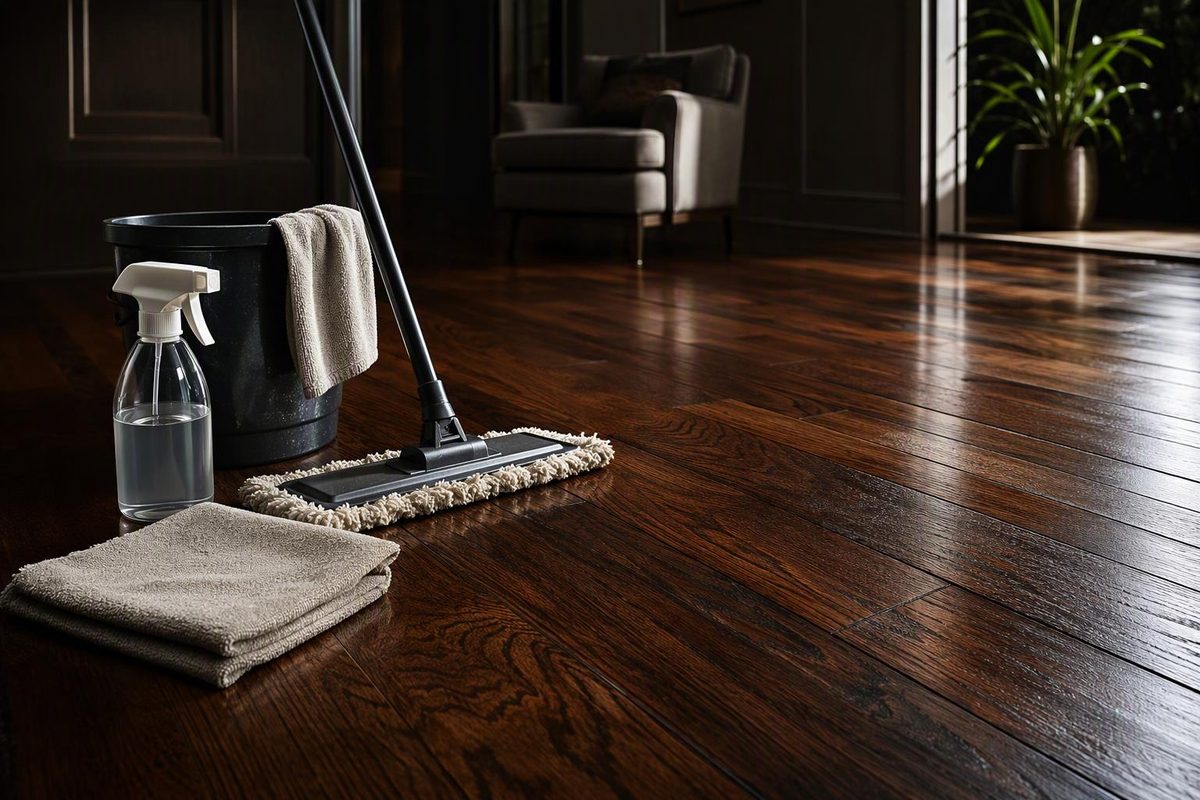
A hardwood floor that looks dull does not automatically need polish or sanding. First separate dirt and cleaner residue from worn finish, damaged wood, or movement in the floor below. Cleaning can address surface soil; it cannot repair a gouge, reverse moisture damage, or stabilize a sagging floor.
For routine care, the safest starting point is regular dry cleaning, prompt spill removal, and a cleaner approved for the floor’s finish. The National Wood Flooring Association’s maintenance guidance recommends those steps and advises against wet mops and steam mops.
1. Identify the finish before choosing a cleaner
Whether the boards are solid or engineered matters for later repairs, but the finish is the first question when choosing cleaning products.
Look for the flooring carton, purchase record, installer’s care sheet, or the name of the finish used during refinishing. Do not choose a cleaner solely because the floor looks glossy or matte.
The main distinctions are:
- Factory-finished flooring: Follow the flooring manufacturer’s care instructions.
- Site-finished flooring: Follow the finish manufacturer’s instructions.
- Natural-oiled flooring: Use its specified cleaning and maintenance system. Cleaners intended for film-forming finishes can damage an oil finish.
- Waxed flooring: Follow a wax-specific care routine; avoid water-based cleaners, which can leave water spots.
These are different maintenance systems, not interchangeable cleaner categories. If the finish is unknown, continue gentle dry cleaning and ask a wood-flooring professional to identify it before applying liquid cleaners, wax, or polish. The NWFA’s care and maintenance guidelines, pages 151–152, explain these finish-specific requirements.
2. Use a low-moisture cleaning sequence
For an intact finish with known care instructions:
- Remove loose grit first. Use a soft broom, dry microfiber dust mop, or vacuum with a hard-floor setting. Turn off the carpet beater bar. Give entryways and busy areas more frequent attention.
- Blot spills promptly. Use a dry cloth, or a slightly damp one if the finish’s care instructions allow, rather than spreading the spill across several boards. Check around pet bowls and beneath damp mats.
- Clean only as needed with the approved product. Follow its dilution and application directions. A concentrate and a ready-to-use cleaner are not interchangeable.
- Keep liquid application minimal. Use a slightly moistened, well-wrung mop or a controlled spray mop as the care instructions allow. Do not leave puddles or standing solution in board seams.
- Change dirty pads. Keep a clean pad available rather than continuing to wipe the floor with a soil-loaded one.
NWFA’s cleaning guidance calls for frequent dry sweeping, hard-surface vacuum settings, immediate spill cleanup, and minimal moisture when damp mopping. Bona’s cleaning guidance likewise warns against beater-bar contact and excess liquid.
If a mark remains, do not automatically increase cleaner strength or scrubbing pressure. Use the hardwood stain guide to distinguish surface residue from discoloration in the finish or wood.
3. Do not treat every dull patch with a shine product
A cleaner removes soil. A polish or refresher adds material to the surface. Neither is the same as applying a new coat of floor finish.
Avoid these shortcuts:
- Steam cleaning or traditional wet mop-and-bucket cleaning.
- Vinegar-based cleaning mixtures.
- Wax on a non-waxed finish.
- Oil soaps on urethane or other film-forming finishes, unless specifically recommended by the flooring or finish manufacturer.
- Products promising to restore, rejuvenate, or add shine, unless specifically recommended by the flooring or finish manufacturer.
The NWFA guidelines warn that unsuitable products can damage coatings and interfere with adhesion when the floor is later recoated. They also advise against vinegar and steam cleaners.
4. Prevent grit and furniture damage
Use breathable entry rugs, keep them clean and dry, and check that rug pads are compatible with the finish. Put fabric-faced protectors beneath furniture legs; inspect them for embedded grit and replace worn ones. Lift furniture instead of dragging it. These measures follow NWFA’s floor-protection guidance.
5. Stop cleaning when the problem is not dirt
If approved cleaning leaves a persistently dull area, assess the finish rather than adding more product. An intact, compatible finish may be a candidate for a screen and recoat.
Raised board edges, buckling, or changes following a leak need moisture investigation before cosmetic work. NWFA’s water-damage guidance says repair decisions require an understanding of moisture in the flooring, substrate, and surrounding air—not just how dry the surface feels. Start with the water-damaged hardwood repair guide.
A soft spot, new sag, or widespread movement is a separate stop point. Arrange an assessment of the subfloor and supporting structure rather than attempting to hide the symptom with filler, finish, or sanding.