
A Practical Polyurethane Timeline, From Final Coat to Full Use
For recoating, many water-based products need about 2-4 hours, while conventional oil-based products commonly need 8-24 hours or longer.
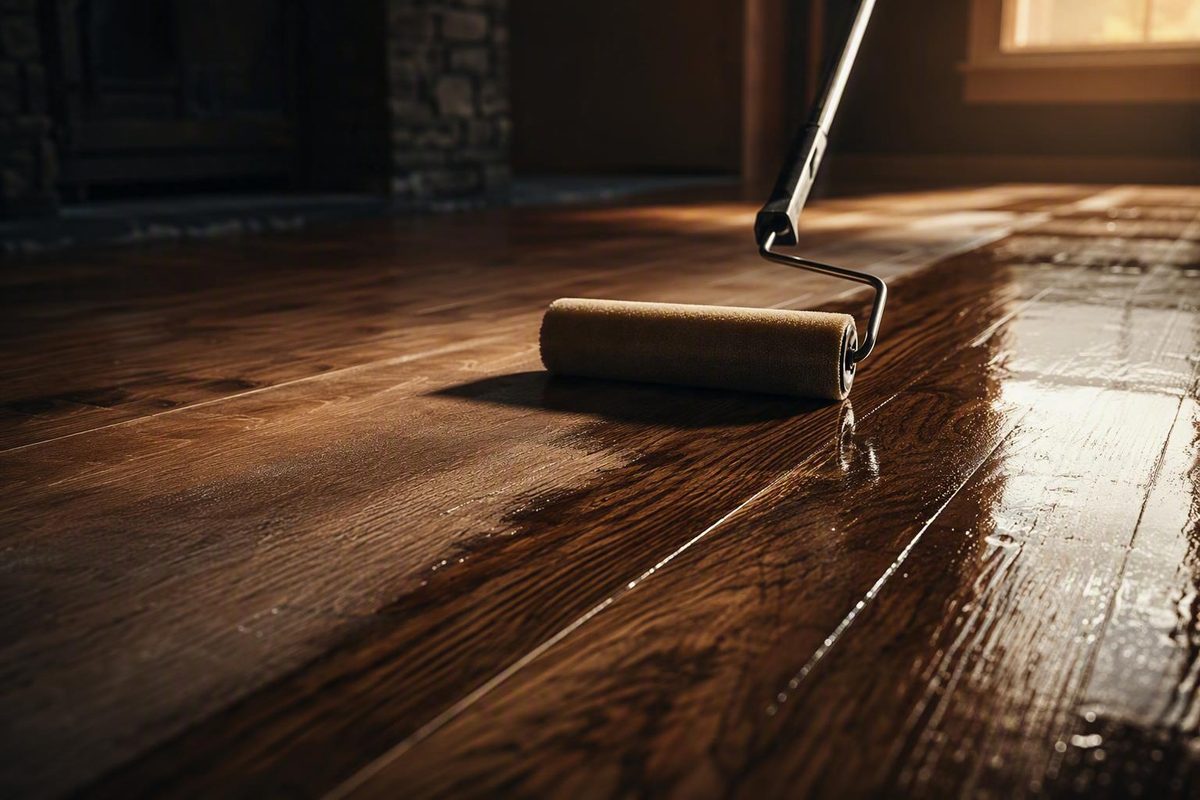
The quick answer: polyurethane drying and curing times at a glance
Under favorable conditions, many water-based polyurethanes become dry to the touch in about 1–4 hours, while conventional oil-based polyurethane may need roughly 6–24 hours or longer. These figures describe surface drying—not readiness for sanding, recoating, furniture, rugs, cleaning, or unrestricted use. One third-party retailer’s guide, for example, reports 1–2 hours to touch for water-based polyurethane and 6–24 hours for oil-based polyurethane under good conditions (review the guide’s timelines and assumptions).
The current label or technical data sheet for your exact polyurethane overrides every general timeline below. The available evidence consists largely of flooring contractors, suppliers, retailers, and woodworking communities rather than representative manufacturer specifications. Use these figures only for preliminary scheduling.
| Polyurethane type | Touch-dry | Recoat-ready | Cautious light use | Full cure |
|---|---|---|---|---|
| Water-based | About 1–4 hours | About 2–4 hours | Selected floor systems permit cautious traffic at about 24 hours | Roughly 4–21 days, depending on the finish |
| Conventional oil-based | About 6–24 hours or longer | About 8–24 hours or longer | Commonly several days, although specified floor systems vary | Roughly 21–30 days, with some estimates extending longer |
The water-based row combines third-party reports ranging from 4–7 days for full cure to 14–21 days, illustrating how widely formulations and finish systems can differ. The shorter figure comes from water-based hardwood-floor guidance and should not be transferred automatically to furniture, cabinets, or an unrelated coating (see the floor-finish drying and curing guidance).
For conventional oil-based polyurethane, one contractor comparison gives 8–12 hours between coats and 21–30 days for full cure. Those are floor-oriented category estimates rather than specifications for every oil-based product (review the contractor’s comparison).
“Cautious light use” is intentionally qualified. A floor that can accept clean sock traffic is not necessarily ready for shoes, pets, furniture, rolling chairs, rugs, wet cleaning, or normal household traffic. Similarly, a tabletop that can be touched or moved carefully may remain too soft for equipment that applies continuous pressure.
Count the cure period from the final coat unless the manufacturer says otherwise. Completing the last application ends the coating stage; it does not mean the finish has developed its final resistance.
Fast-curing, two-component, moisture-cured, wipe-on, and other specialty formulations may fall well outside these ranges. Schedule those products only from their own documentation, including any stated mixing, pot-life, application, ventilation, recoat, and return-to-service requirements.
Dry to the touch is not the same as fully cured
Polyurethane passes through several separate milestones:
- Touch-dry describes the surface. It no longer feels wet or readily transfers during whatever limited check the manufacturer permits.
- Recoat-ready means the film has reached the stage at which another coat may be applied under the product’s directions.
- Light-use ready means the finish has enough early resistance for the specific limited contact permitted by the manufacturer.
- Fully cured means the coating has developed its intended final hardness and resistance.
Full cure is not necessarily the first moment at which any use is permitted. Some products provide defined return-to-service schedules that precede full cure. When no such schedule exists, however, full cure is the conservative benchmark for unrestricted use, concentrated loads, rugs, or other high-risk contact.
A surface may lose its wet appearance while the film beneath it is still developing. Recoat readiness also does not prove cure: it is primarily an application and adhesion milestone, while cure concerns the developing performance of the finished coating.
That distinction explains why dry-feeling polyurethane may still acquire:
- fingerprints or scuffs;
- dents and pressure marks;
- sticking where two surfaces remain in contact;
- impressions from furniture feet;
- patterns from rugs or textured coverings;
- marks from equipment that remains in one position.
An oil-based polyurethane desktop illustrates the problem. After 24 hours, it may feel dry enough for brief contact but still be vulnerable to a monitor, lamp, stacked books, desk mat, or equipment feet. In a woodworking community discussion about an oil-based desktop, the accepted response treats 24 hours as too soon for normal service and describes weeks-long curing, while acknowledging that actual timing depends on conditions (read the desktop discussion). That is experience-based guidance, not a current manufacturer specification, but it demonstrates why sustained pressure matters.
A monitor stand or furniture leg applies pressure to the same small areas continuously. A rolling chair adds movement, while dragging furniture applies force across the film.
The same distinction applies to floors. “Walkable” normally means limited traffic under specified conditions. It does not automatically authorize:
- dragging or pivoting furniture;
- rolling an office chair repeatedly;
- placing appliances on narrow feet;
- laying down rugs, plastic, or protective coverings;
- allowing wet shoes, spills, or pet accidents;
- damp mopping;
- returning the room to unrestricted traffic.
Think of these as progressively more demanding uses rather than one event called “dry.”
Water-based versus oil-based polyurethane timelines
Water-based polyurethane generally becomes touch-dry and permits recoating sooner than conventional oil-based polyurethane. The category name still cannot establish an exact schedule. Formulation, film thickness, room conditions, substrate, application method, and the number of coats can all alter the timing.
Water-based polyurethane
For initial planning, allow approximately:
- 1–4 hours to become touch-dry
- 2–4 hours before recoating
- about 24 hours before cautious floor traffic, when expressly permitted
- roughly 4–21 days for full cure
A third-party timeline lists water-based polyurethane at 1–2 hours to touch, 2–4 hours to recoat, and 14–21 days to cure under favorable conditions (review the category-level estimates). Other floor-oriented guidance reports a substantially shorter cure period, which is why the broad range is more defensible than one universal number.
A short recoat interval should not be confused with readiness for service. Applying another coat after several hours may be correct under the label even though the completed floor or object remains vulnerable for days afterward.
Water-based products can also differ significantly from one another. A one-component floor finish, a two-component system, and a consumer furniture coating may all have different application windows and return-to-service schedules. Product-specific fast-cure figures are examples only and should not be generalized.
Conventional oil-based polyurethane
For conventional oil-based polyurethane, a more conservative preliminary plan is:
- about 6–24 hours or longer to become touch-dry
- about 8–24 hours or longer before recoating
- several days before cautious use
- roughly three to four weeks, commonly about 21–30 days, for full cure
Some third-party sources report longer touch-dry or recoat periods, and one contractor comment extends oil-based cure estimates to 30–45 days. The disagreement reinforces the need to use the exact product documentation rather than treating the broad range as a guaranteed deadline.
Oil-based finishes are commonly described as becoming tack-free as liquid components evaporate, followed by continuing oxidative curing that develops the harder film. A contractor’s comparison likewise attributes the longer oil-based schedule to evaporation plus oxidation and reports 8–12 hours between coats and 21–30 days to full cure (see the oil-based timeline and explanation).
This helps explain an otherwise confusing result: an oil-based surface can feel dry while remaining unsuitable for concentrated pressure, polishing, or normal wear.
Do not apply these conventional averages to every product carrying the polyurethane name. Two-component and fast-curing systems may harden much sooner, while wipe-on products or overly heavy applications may follow different schedules. Without current first-party documentation, one fast product is not evidence that another will behave the same way.
When floors, furniture, and desktops can return to use
Return to service should be organized by risk, not elapsed time alone. Light touch, sock traffic, furniture placement, rolling loads, moisture, cleaning, and covered surfaces place different demands on a young finish.
Light contact and sock traffic
Brief handling is generally less demanding than prolonged loading. For hardwood floors, several third-party sources use about 24 hours after the final coat as a cautious sock-traffic estimate. One flooring contractor strongly recommends no traffic during the first full day, followed only by careful access that avoids dirt, oils, water, and other contaminants (see the contractor’s dry-time guidance).
That is floor-specific guidance, not a universal 24-hour rule. The product must permit traffic, the stated environmental conditions must have been maintained, and the coating must actually be dry. If it remains tacky, soft, or easily marked, elapsed time does not make it ready.
When walking is allowed, keep the route short, wear clean socks, and avoid pivoting or sliding.
Furniture placement
Published furniture schedules vary significantly. Some specified floor systems permit careful replacement after approximately 24 hours, while broader third-party guidance ranges from 48–72 hours to several days, especially for conventional oil-based finishes.
If furniture must return before full cure and the product expressly permits it:
- Lift each item instead of dragging it.
- Position it once rather than shuffling it across the floor.
- Be cautious with narrow feet and small casters that concentrate force.
- Delay exceptionally heavy furniture, appliances, pianos, safes, and exercise equipment.
- Do not assume that temporary plastic, cardboard, or improvised pads are suitable for a curing finish.
These are conservative risk controls rather than a universal furniture schedule. A person’s foot moves away after a step; a furniture leg may remain under load continuously.
Rolling and dragging loads
Rolling chairs, carts, appliances, and wheeled furniture combine weight with repeated motion. A finish that tolerates careful walking may still mark under this type of use. Dragging adds shear across the coating and is more demanding still.
Delay rolling and dragging beyond the basic walk-on period. If the manufacturer provides no separate rolling-load schedule, full cure is the prudent benchmark when avoiding marks is especially important.
Rugs and covered surfaces
Rugs remain in continuous contact with the coating and may leave an impression or stick if placed too early. Hardwood-floor guidance commonly advises keeping area rugs off until the finish has fully cured; published contractor schedules also vary by finish system.
Follow the manufacturer’s explicit rug schedule when one is available. If none is provided, waiting for full cure is a conservative—not universal—practice.
Do not use a rug, plastic sheet, drop cloth, or flattened cardboard to protect a tacky coating. These materials add contact to a surface that is not ready to bear it.
Desktops, tables, cabinets, and other furniture
No general floor timeline can establish when a desktop or cabinet is ready. For these applications, distinguish brief handling from prolonged pressure:
- Moving an object carefully may be possible before normal use.
- A monitor, lamp, stack of books, or equipment foot creates sustained pressure.
- A mat or pad remains in continuous contact with the finish.
- Closed doors, drawers, or stacked coated parts may keep surfaces pressed together.
During early curing, keep heavy equipment off the surface, avoid leaving objects in one position for extended periods, and postpone damp wiping unless the product instructions specifically permit it. These are risk-based precautions, not validated return-to-service times for every furniture coating.
Minimum usability and prudent usability are different. A floor that can be crossed carefully or a tabletop that can be moved is not necessarily ready for unrestricted service.
Temperature, humidity, airflow, and coat thickness
Published drying times assume particular conditions. They are not stopwatch deadlines for a cool basement, humid summer room, closed house, or cold workshop.
Across the available third-party guidance, favorable planning conditions commonly fall around:
- 65–77°F
- approximately 40–60% relative humidity
- gentle, indirect air circulation
- thin, even coats
One flooring-supplier guide gives preferred application conditions of 65–75°F and 40–60% relative humidity and identifies formulation, coat thickness, temperature, and humidity as relevant variables (see the stated application conditions). The range specified by the exact product still controls.
Temperature
Cool conditions can slow both initial drying and subsequent curing.
Bring the room, wood, and coating into the permitted range before application whenever practical. Do not improvise with a hair dryer, heat lamp, open flame, space heater, or concentrated high heat. The supplied evidence does not establish safe operating limits or coating compatibility for those methods.
Humidity
If room conditions differ materially from those assumed by the product’s instructions, plan from the slower end of the schedule.
Warm, low-humidity conditions can create a different problem for some water-based floor finishes: the coating may set too quickly to level evenly. Faster surface drying is not automatically better.
Airflow
Some air exchange can help prevent moisture or solvent from accumulating near the coating, but useful airflow is gentle and indirect. Water-based floor guidance recommends indirect circulation and warns that air blown directly across the wet coating can cause uneven drying and application marks (review the airflow guidance).
If using a fan, support general room circulation rather than aiming a strong stream directly at the surface. Follow the product’s ventilation instructions, which may address concerns not covered by a general drying guide.
Coat thickness
Third-party flooring guidance associates thick or uneven application with slower drying and a greater risk of tackiness or uneven results.
Apply the coverage and film thickness specified by the product. “Thin coats” should not mean arbitrary dilution or an improvised spread rate.
Other variables
Additional factors include:
- exact formulation and resin system;
- one-component versus two-component chemistry;
- number of coats;
- brush, roller, pad, spray, or wipe-on application;
- porous versus previously sealed wood;
- stain, filler, sealer, or another coating beneath the polyurethane;
- wood moisture and surface contamination;
- naturally oily wood;
- differences between early and later coats.
These variables cannot be reduced to a reliable rule such as “add two hours.” When actual conditions differ from the stated reference conditions, use the slow end of the range and evaluate the coating rather than applying a fixed correction.
How long to wait between coats and before sanding
The first rule is simple: the exact label’s recoat window controls.
As category-level estimates, many water-based polyurethanes permit another coat after about 2–4 hours, while conventional oil-based products commonly require about 8–24 hours or longer. These are recoat estimates, not universal sanding or cure times.
A manufacturer-defined recoat window may allow successive coats to bond without sanding. After that window closes, the directions may require light abrasion to provide mechanical adhesion. A community discussion illustrates this distinction with one product whose label permitted recoating after 2 hours without sanding but required sanding after 24 hours (see the product-specific multiple-coat discussion). That schedule belongs only to the product discussed.
Before applying another coat:
- Confirm that the label’s minimum interval has passed.
- Check whether temperature and humidity remained within the specified range.
- Inspect the surface for tackiness, softness, haze, or delayed drying.
- Determine whether the no-sanding recoat window remains open.
- Follow the product’s abrasion and dust-removal directions if the window has passed.
Do not sand polyurethane that is still tacky or soft. If the coating smears, moves under light pressure, or immediately clogs the abrasive, allow more time rather than forcing the process.
Light abrasion can remove dust nibs and improve smoothness, but it is not automatically required between every coat. The need for sanding depends on the product, elapsed time, and surface condition.
Do not adopt one universal grit or sanding procedure from an unrelated product. Abrasive type, grit, pressure, edge treatment, and dust removal should match the coating’s instructions.
Recoating too soon may trap moisture or solvent and can contribute to prolonged softness or adhesion problems. Waiting indefinitely is not automatically harmless either: after the specified recoat window closes, abrasion may become necessary. The objective is to recoat within the correct window under the required conditions.
What to do when polyurethane is still tacky after 24 hours
Tackiness after 24 hours does not automatically mean the finish has failed. It may be consistent with a conventional oil-based product, a coating with a longer published schedule, or unfavorable drying conditions.
Do not apply another coat merely because the expected interval has elapsed. Covering a wet or soft layer does not make it ready.
Check the following:
- Temperature: Was the room or wood cooler than permitted?
- Humidity: Was the room unusually humid?
- Air circulation: Was the space closed with little air exchange?
- Coat thickness: Was the finish applied more heavily than directed?
- Multiple coats: Were earlier coats given the required time?
- Wood condition: Could excess moisture or contamination be present?
- Wood species: Is the wood naturally oily?
- Underlying materials: Was stain, filler, sealer, wax, cleaner, or another finish insufficiently dry or incompatible?
- Formulation: Does the product naturally have a longer drying schedule?
A contractor’s general guide identifies temperature, humidity, ventilation, coat thickness, application method, surface preparation, and wood type as factors affecting drying and curing (review the listed drying variables).
Allow more time while maintaining the temperature and humidity specified by the product and providing safe, indirect ventilation. Do not add aggressive heat, point powerful airflow at the coating, apply more polyurethane, wipe the surface with solvent, or begin stripping unless the manufacturer’s instructions call for that response.
Keep furniture, rugs, plastic, protective sheets, tools, and equipment away from the tacky surface.
Odor may decline while a coating dries and cures, but absence of odor is not validated proof of full cure or permission for unrestricted use.
If the surface remains tacky for several days beyond the label’s stated schedule despite appropriate conditions, contact the manufacturer. Be prepared to provide:
- the exact product and batch information;
- application date and number of coats;
- substrate and wood species;
- underlying stain, sealer, or filler;
- approximate temperature and humidity;
- application method and coverage;
- a description or photographs of the problem.
Product-specific diagnosis is more reliable than choosing a universal day on which every tacky finish should be sanded or removed.
A conservative planning checklist for a successful finish
A dependable schedule begins before the first coat.
-
Identify the formulation. Determine whether the coating is water-based, conventional oil-based, two-component, wipe-on, fast-curing, exterior, or another specialty finish.
-
Read the current label and technical data sheet. Record the permitted temperature and humidity, application method, coverage rate, recoat interval, sanding directions, maximum recoat window, and return-to-service schedule.
-
Prepare the environment. Bring the room, wood, and coating into the specified range. Arrange indirect circulation without blowing air across the wet film.
-
Prepare the substrate completely. Do not coat wood, stain, filler, or sealer that has not reached the condition required by the polyurethane manufacturer.
-
Apply the specified film. Use even coats at the stated coverage rate rather than attempting to build the finish quickly through heavy application.
-
Observe each recoat window. Use the label’s interval instead of a generic water-based or oil-based average. If the window passes, follow the prescribed abrasion process.
-
Evaluate the actual coating. If it remains tacky or soft, wait. Elapsed time alone cannot make an unready film suitable for sanding or recoating.
-
Separate application time from use time. The final coat may be complete while the room or object still needs days or weeks of protected curing.
-
Match the wait to the intended use. Brief handling, sock traffic, furniture, rolling loads, rugs, cleaning, and unrestricted service should not share one deadline.
-
Plan conservatively when consequences are high. Cool or humid conditions, limited ventilation, heavy objects, narrow furniture feet, rolling chairs, and prominent tabletops justify additional caution.
Before coating a floor, arrange another route through the house. Plan where furniture and rugs will remain, and keep pets, children, dirt, liquids, and unnecessary traffic away during the vulnerable period.
For a desktop or furniture project, postpone assembly steps that create sustained pressure. Monitor arms, hardware, clamps, rubber bumpers, stacked components, and mats can be more demanding than carefully moving the piece.
The hierarchy is straightforward: current product label first, technical data sheet or manufacturer guidance second, and broad third-party category estimates only for initial planning.
Frequently asked questions
Can I walk on polyurethane after 24 hours?
Possibly. Several hardwood-floor sources permit cautious walking the day after the final coat, provided the exact finish allows it, the required conditions were maintained, and the surface is actually dry (see the floor-specific dry-time guidance).
Treat that as clean sock traffic—not permission for shoes, pets, spills, furniture, rolling chairs, cleaning, or unrestricted use. Do not transfer a floor-specific 24-hour estimate automatically to furniture, stairs, cabinets, or specialty coatings.
How long should polyurethane dry before sanding or applying another coat?
Many water-based products permit recoating after approximately 2–4 hours, while conventional oil-based products commonly require 8–24 hours or longer. A flooring-supplier comparison reports 2–3 hours for water-based polyurethane and 8–24 hours for oil-based polyurethane, while emphasizing that the label controls (review the stated recoat intervals).
Recoat time and sanding time are not interchangeable. Do not sand a tacky, soft, or gummy film. Whether abrasion is required depends on the directions and whether the recoat window remains open.
Why is my polyurethane still tacky after 24 hours?
Possible causes include low temperature, high humidity, poor air exchange, an overly heavy coat, multiple coats applied too quickly, excess wood moisture, oily or contaminated wood, an underlying material that was not ready, or a formulation with a naturally longer schedule.
Do not cover it or add another coat. Maintain the product’s specified conditions, provide indirect ventilation, and allow more time. If tackiness persists beyond the published schedule, ask the manufacturer for product-specific guidance.
Can a fan or dehumidifier make polyurethane dry faster?
A fan can support general air exchange if it creates gentle, indirect circulation. Do not aim strong airflow directly across wet polyurethane, especially a water-based floor finish, because uneven drying may interfere with leveling.
A dehumidifier may help bring an overly humid room into the product’s permitted range, but it should not be used to force an unspecified accelerated schedule. Monitor both temperature and humidity and follow the exact coating instructions.
When can I put furniture and rugs back on a polyurethane floor?
Furniture schedules range from careful placement after approximately 24 hours for selected systems to 48–72 hours or several days in more conservative third-party guidance. One floor-finish source recommends at least 24 hours before furniture while advising that area rugs remain off until full cure (review the furniture and rug guidance).
Lift furniture instead of dragging it, and delay rolling loads, appliances, narrow feet, and exceptionally heavy items longer than ordinary foot traffic. Follow the manufacturer’s explicit rug schedule; if none is provided, waiting for full cure is the conservative choice.
The practical rule is simple: identify the polyurethane type, treat touch-dry, recoat-ready, light-use, and full-cure as separate milestones, and let the exact product documentation control. Water-based finishes often move from coat to coat within hours, while conventional oil-based finishes commonly need overnight or longer. Normal use may still require days, and full cure may require weeks. If conditions are unfavorable or the surface remains tacky, wait rather than recoating, protect the finish from pressure and moisture, and seek manufacturer guidance when it remains outside the published schedule.