
Plywood underlayment can be affected—but the label alone does not decide
Some imported plywood underlayment falls within hardwood and decorative plywood duty cases. Check origin, panel construction and supplier documentation.
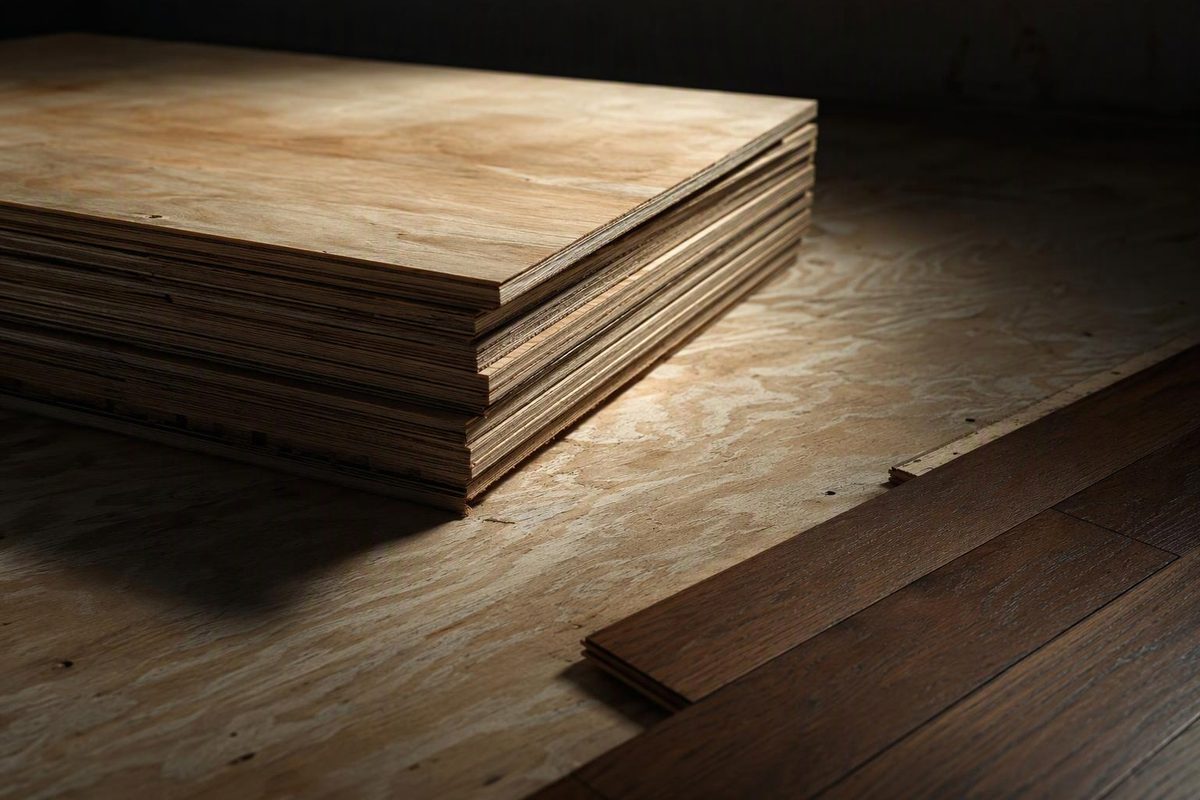
Yes, some plywood underlayment panels can be affected. For U.S. buyers, the hardwood and decorative plywood duty cases involving China, Indonesia and Vietnam are not limited to visible cabinet or furniture panels. The USITC’s September 2026 final report identifies flooring underlayment as a reported end use of hardwood and decorative plywood. It also notes overlapping underlayment uses for softwood structural plywood. The job a panel performs therefore does not, by itself, determine its duty treatment.
The practical question is not simply “Is this underlayment?” It is “Where was this exact panel manufactured, what is it made from, and which duty scope applies?”
This article addresses those three-country plywood cases, with information checked through September 30, 2026. If you mean the Canadian plywood tariff, see the separate Canadian plywood subfloor tariff guide.
Which panels need checking?
Commerce’s July 2026 scope describes flat, multilayered plywood and certain veneered panels. Coverage is not limited by sheet dimensions or thickness, and the definition allows hardwood, softwood or bamboo face or back veneers. There is no general exemption for a panel merely because it will be hidden beneath flooring. Commerce’s scope, Appendix I sets out the product definition and exclusions.
| Panel you are considering | What to verify |
|---|---|
| Hardwood-veneer plywood manufactured in China, Indonesia or Vietnam and sold as underlayment | It may be covered. Ask for manufacturing origin and written confirmation of duty treatment from the supplier’s importer or customs broker. |
| Certified softwood structural plywood used as underlayment | Check its certification and product identity. The USITC terminated the investigations for stamped and certified softwood structural plywood and structural plywood downfall. |
| U.S.-manufactured plywood underlayment | It is not an import from the three countries covered by these cases. Compare its delivered price rather than assuming a tariff-related saving. |
| Engineered wood flooring | Do not confuse finished flooring with plywood underlayment. Multilayered wood flooring is specifically excluded from this investigation’s scope, but that does not establish freedom from other duties. |
The structural-plywood distinction is documented in the USITC’s August 19, 2026 decision. Commerce’s structural exclusion has detailed certification, stamping and, where applicable, core-species conditions—not simply a requirement that the panel look like construction plywood. Its scope also excludes Chinese hardwood plywood already subject to the earlier hardwood-plywood orders. Excluded from this particular case does not necessarily mean duty-free. Commerce’s scope lists these exclusions.
What this means for your flooring quote
On August 19, 2026, the USITC voted affirmatively on hardwood and decorative plywood, clearing the way for Commerce to issue antidumping and countervailing duty orders. This is not one flat “plywood tariff” applied equally to every sheet: Commerce’s final determinations list different rates by country and producer/exporter. See the USITC decision and Commerce’s final rate tables.
Importers are liable for applicable antidumping and countervailing duties; homeowners may feel the effect through prices or availability. Faegre Drinker’s explanation describes that liability and the potential purchasing effects. For your budget, use a supplier’s actual quote—not a published duty percentage added to a store’s shelf price.
Before buying, ask the supplier for:
- The exact brand, product number and country of manufacture—not just the distributor’s address.
- A product sheet and a photograph of any grade or certification stamp.
- Confirmation of applicable duties from its importer or customs broker.
- A dated, delivered-price quote, available quantity and quote-expiration date.
For example, if an acceptable replacement costs $8 more per sheet and you need 12 sheets, the panel-cost increase is $96. That is illustrative arithmetic, not a current market price.
Do not solve a price problem with the wrong floor layer
A separate plywood underlayment provides a suitable surface above the subfloor. APA describes its plywood underlayment’s special face and inner-ply construction as resisting dents and punctures; that role is different from the structural panel supporting the floor. See APA’s underlayment guidance.
Before substituting cheaper sheathing, OSB or another board, check the finish-floor manufacturer’s approved substrates and the replacement panel’s installation instructions. Thickness alone is not enough to establish equivalence.
If the existing floor is soft, moving or sagging, resolve that condition before shopping for a smoother top layer. Use the subfloor repair diagnosis guide to separate underlayment damage from a subfloor or support problem. A lower-priced sheet is useful only if it is suitable for the floor assembly you actually need.