
Hardwood Floors With Dogs: What to Choose and How to Protect Them
Choose hardwood for a home with dogs by separating dent resistance, finish wear and traction, then protect high-traffic routes and spill-prone spots.
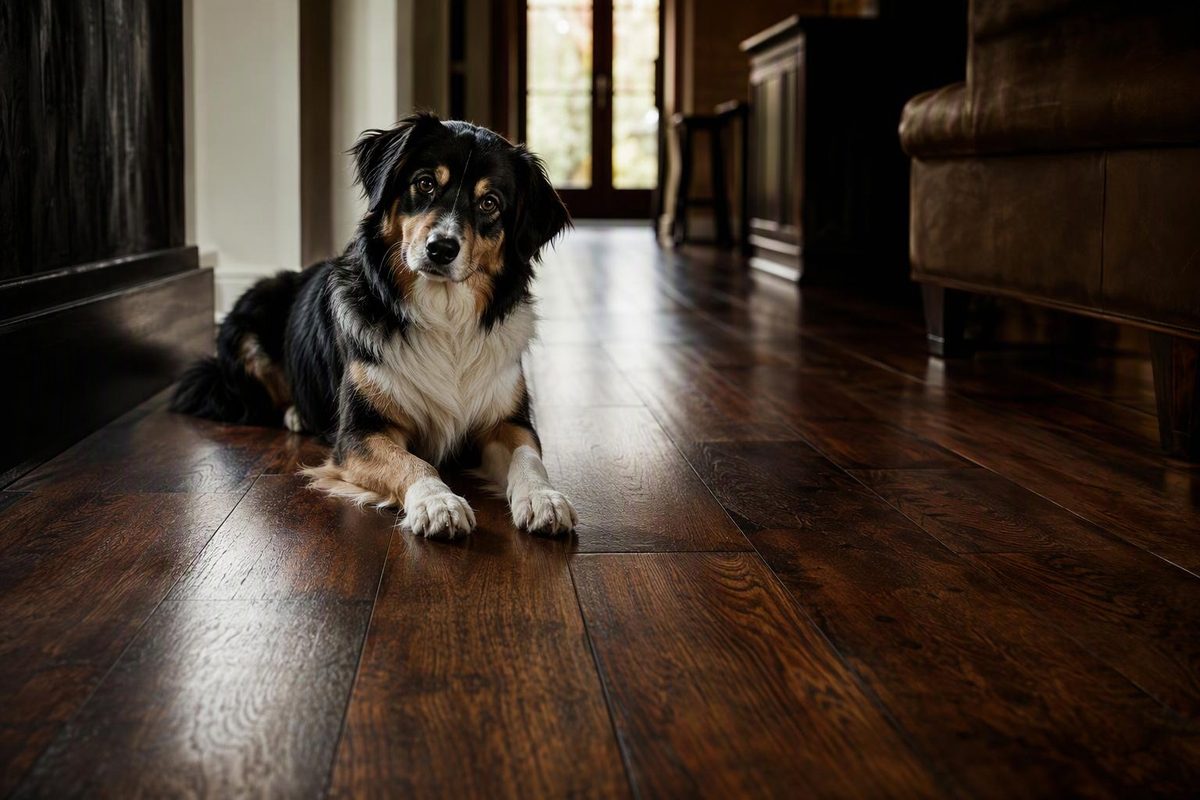
Hardwood floors can work in a home with dogs, but no finish makes them dog-proof. Choose for three separate needs: resistance to dents in the wood, protection against surface wear, and secure footing for the dog. A harder species helps with the first; the finish and daily care address the second; well-secured rugs and runners address the third.
Before replacing an existing floor, identify what is actually bothering you. Shallow finish scratches, indented wood, slipping and recurring accidents need different solutions—not necessarily a new floor.
Choose the wood, finish and repair options separately
Hardness helps with dents—not every scratch
The Janka test measures the force needed to press a steel ball into wood. It is a comparison of indentation resistance, not a rating of the finished floor’s scratch resistance or overall durability. Construction, finish and the way a load contacts the floor also affect performance. Floor Detective explains these limits.
For a starting shortlist, compare oak and hickory rather than choosing a softwood solely for its appearance. Sustainable Lumber Co.’s species comparison lists red oak at 1,290 pounds-force, white oak at 1,360 and hickory at 1,820, versus Ponderosa pine at 460. These numbers favor hickory for dent resistance, but do not promise an unmarked floor.
Dog-claw marks can be grooves compressed into the wood while the coating remains intact. Bona’s dogs-and-timber-floors guidance distinguishes that damage from a scratch through the coating and warns that a finish cannot prevent physical indentation from claws. An extra coat is not a substitute for harder wood.
Use low sheen to make wear less conspicuous
Matte or satin is a practical starting point if visible wear worries you. The National Wood Flooring Association says lower-sheen finishes make small scratches and normal wear less noticeable. That is a visibility advantage, not proof that matte resists scratching better—or gives a dog better traction.
Ask the supplier or refinisher about the specific finish system, not simply “water-based versus oil-based.” Request its cleaning instructions, maintenance-recoat procedure and repair options. For site-applied finishes, also ask when dogs and rugs may return; do not assume permission for light foot traffic means the floor is ready for claws and play.
Engineered does not automatically mean tougher
Engineered hardwood still has real wood at the surface. Its layered construction reduces expansion and contraction compared with solid wood, but that is a different benefit from resisting claw damage. NWFA describes the construction differences.
If future repairs matter, ask for the wear-layer thickness and written confirmation of whether the product can be sanded. NWFA explains that sanding capacity depends on wear-layer thickness, flatness and condition, among other factors—not just the label “solid” or “engineered.” See our engineered hardwood selection guide for the broader product checks.
Before buying, obtain the exact warranty. Ask whether its coverage includes scratches, dents and pet accidents rather than assuming a long finish warranty covers those events.
Plan traction before changing the whole floor
Watch your dog getting up, turning corners and approaching doors. If the paws slide, or the dog hesitates on bare wood, prioritize secure footing rather than experimenting with a floor polish.
Park Slope Veterinary Center recommends non-slip rugs and runners for mobility-compromised dogs, with no raised corners or edges. It also recommends keeping nails short and trimming fur that extends between the toes. Ask your veterinarian or groomer for help with paw care; persistent slipping, difficulty rising or a changed gait deserves veterinary attention.
Lay out a connected route between the dog’s bed, exit and feeding area, including turning points. Check that both the runner and its pad stay put. Confirm the backing is compatible with the floor finish: Bona warns that some rubber and plastic materials can mark coated wood. A loose rug is not a traction solution.
Protect the places where damage starts
A manageable routine matters more than chasing a scratch-proof coating:
- At entrances: use mats inside and outside, and towel off wet or muddy paws.
- Along play routes: move ball-chasing and repeated sharp turns off bare hardwood. Bona identifies indoor play as a source of increased damage risk.
- Around bowls: use a sufficiently large, finish-compatible spill-catching mat or tray. Check underneath it and dry both the mat and floor after spills.
- Across the floor: remove dirt regularly with a soft dust mop or a vacuum on its bare-floor setting.
NWFA’s maintenance guidance calls for immediate spill cleanup with a dry or slightly damp cloth, a cleaner suited to the finish, and no wet or steam mopping.
Treat urine accidents promptly and check beneath rugs. Bona warns that prolonged or repeated exposure can pass through finishes into the wood; a wet rug can hold the contamination against the floor. Use a cleaner approved for the flooring and finish rather than assuming every pet cleaner is compatible.
If your dog has already marked the floor
Inspect under angled light before choosing a repair. Is the mark on the surface, through the coating, or depressed into the wood? A fingernail catching a groove does not, by itself, prove the finish has broken.
An intact but worn finish may be a candidate for a screen and recoat. Deep dents and scratches need a separate repair assessment; more clear finish will not undo compressed wood. For dark accident marks, use the stain-by-type guide rather than treating them as ordinary scuffs.
Fix the recurring cause—sliding turns, long claws, trapped spills or repeated accidents—before paying to restore the surface.