
Mullican’s Plant Closure: What Homeowners Should Check
Mullican plans to close its Ronceverte plant November 20, 2026. Here’s what the consolidation means for orders, repair boards and warranty questions.
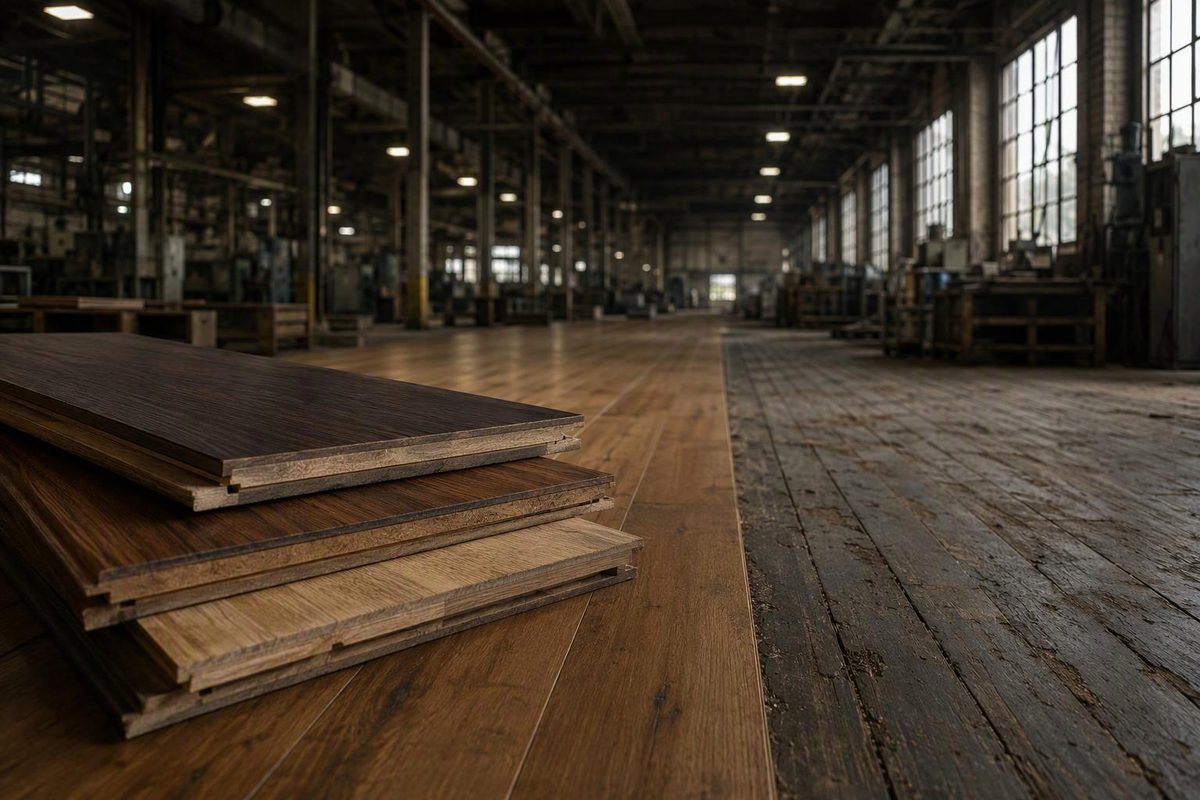
Mullican is closing one plant, not announcing a company-wide shutdown. As of October 30, 2026, its Ronceverte, West Virginia, plant is scheduled to close, with operations consolidating into Norton, Virginia, effective November 20, 2026. Mullican says it will continue serving customers from facilities in Johnson City, Tennessee; Norton, Virginia; and Holland, New York. Floor Daily’s September 24 report carries the company’s statement.
For homeowners, the useful response is to verify the exact flooring product, available quantity and delivery date—not assume every Mullican collection is disappearing or rush to replace a sound floor.
What is closing, and why?
Ronceverte was Mullican’s first plant and opened in 1985. MetroNews reported that employees received a 60-day WARN layoff notice and that about 70 people were expected to lose their jobs. Its report attributed the decision to weak demand for high-end hardwood flooring, high inventory and expensive operating costs, including property taxes, water and flood insurance. Those are reported explanations, not evidence that the flooring itself is defective. MetroNews, September 22
In comments sent directly to Wood Floor Business, Mullican also linked the closure to substantial technology and automation investments at Norton intended to increase production and productivity. The local job loss is significant even though the company is maintaining other facilities. Wood Floor Business, September 23
The announcement establishes a manufacturing consolidation. It does not establish which individual products will be discontinued, how long a particular order will take or whether your dealer will offer a discount.
If you are ordering flooring, confirm the whole job
Before paying a deposit or setting an installation date, ask the retailer to put these details in writing:
- Exact product: collection, SKU, species, color, solid or engineered construction, width and thickness.
- Quantity: enough for the measured project, the installer’s planned cutting allowance and any agreed repair reserve.
- Stock status: physically available inventory versus material awaiting production or transfer.
- Delivery commitment: expected arrival, whether the order may be split and what happens if delivery slips.
- Terms: returns, cancellations and warranty coverage, particularly for clearance stock.
Do not treat reported high inventory as proof that your exact SKU is plentiful or that installed hardwood prices will fall. A quote still needs to separate material from installation and preparation; see whether hardwood flooring is getting cheaper in 2026.
Stop point: if the seller cannot confirm enough material for the planned area, resolve that before removing the existing floor.
If you need boards for a repair, identify them first
Keep the invoice, photograph carton labels and save an unused board if you have one. Give the dealer the product code rather than asking only for “Mullican oak.” Have the installer compare the replacement board’s dimensions, tongue-and-groove fit, surface texture and finish against the existing floor before ordering a full repair quantity.
Ask whether the original SKU remains available and whether a proposed substitute is actually compatible. A plant closing is not proof that a match is impossible, but the brand name alone is not enough to approve replacement boards. The guide to matching hardwood boards for repair explains the next decisions when the original product cannot be sourced.
What about an existing warranty?
The closure announcement does not say Mullican’s warranties are ending. Nor does continued operation guarantee that a particular defect or repair is covered.
Mullican’s current warranty guidance tells owners to identify the applicable warranty through the product details and contact their retailer first to file a claim. Claims must fall within the coverage period, and purchase-date verification may be required. Save your receipt, product information and photographs of the problem.
For a new installation, inspect boards before they go down: Mullican says visible defects are not covered once installed. It also places responsibility for acceptable subfloor and job-site conditions on the installer, supervisor or owner. Mullican warranty guidance
The consolidation is a supply question; it does not remove the need to diagnose moisture, movement or subfloor problems before installing or repairing hardwood.