
Which Hardwood Floor Sander Do You Need?
Compare drum, belt, orbital, multi-disc and edge sanders, then check floor condition and rental equipment before choosing a machine.
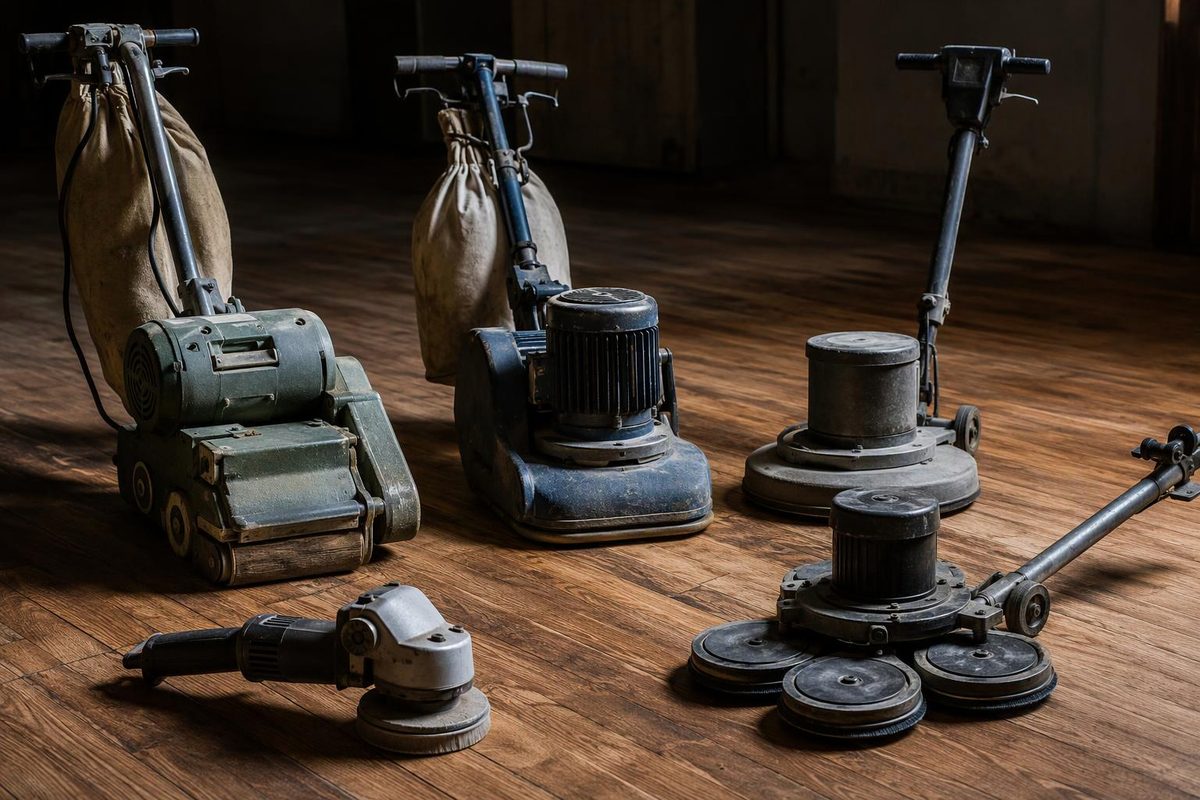
For a full sand-back to bare wood, a floor drum or belt sander is a main-machine option. For light abrasion and final smoothing, an orbital floor sander may fit better. An edger handles perimeter work; it is not a practical replacement for the main machine. Powered multi-disc machines add another option, but their capabilities depend on the actual model and sanding head.
Choose by the amount of material that needs removing—not simply by which machine looks easiest to steer.
First check whether sanding is the right treatment
A dull but intact finish may need a maintenance coat rather than removal to bare wood. The NWFA distinguishes that light cleaning-and-abrasion treatment from a full resand, which is appropriate for worn-through finish, wood damage or a color change. See screening and recoating an intact finish before booking heavy sanding equipment. NWFA refinishing guidance
Two conditions should stop equipment selection:
- Unknown remaining wood thickness. Identify solid versus engineered flooring and check previous sanding and manufacturer restrictions. A gentler machine does not make a thin wear layer safe to sand. The NWFA says sanding capacity depends on wear-layer thickness, flatness, condition, equipment and operator skill—not a fixed number of refinishes. Start with checking how much refinishing capacity remains. NWFA
- Cupping or unresolved movement. Investigate the moisture imbalance before trying to flatten raised board edges, and allow the flooring to reach moisture equilibrium before deciding on sanding. Sanding wet, cupped boards can leave their edges lower than their centers after drying. MFMA moisture-distortion guidance and National Wood Floor Consultants’ explanation. Sagging, loose boards and subfloor movement also need diagnosis rather than an attempt to sand away the symptom; start with diagnosing hardwood-floor damage.
What each floor sander does
| Machine | Best-matched role | Selection caution |
|---|---|---|
| Floor drum sander | Main sanding for removal to bare wood. A rental model such as the EZ-8 uses a rotating abrasive-covered drum. | It can cut a depression if left running in one place with the drum down. Training and control matter. EZ-8 operator manual |
| Floor belt sander | Main sanding and substantial material removal, especially in professional refinishing. | This means a walk-behind floor machine, not a handheld woodworking belt sander. The FloorCrafter, for example, is designed for aggressive cutting and professional production. American Sanders |
| Orbital floor sander | Light abrasion, fine sanding and smoothing earlier sanding scratches, depending on the model. | Do not assume every orbital rental is suited to heavy finish removal. American Sanders specifically positions its rectangular OBS-18 for screen-and-recoat and fine finish sanding. OBS-18 specifications |
| Powered rotary multi-disc sander | Fine sanding or full bare-wood sanding when the system is designed for it. | Multiple discs alone do not establish cutting capability. Bona describes its four-head Power Drive as suitable for both initial and final sanding. Bona announcement in Hardwood Floors Magazine |
| Floor edger | Sanding wall lines and other areas the main machine cannot reach. | Check nose clearance: an ordinary edger may not reach beneath a cabinet toe kick. Pushing harder is not a substitute for the correct tool or abrasive. Hardwood Floors Magazine’s edger guidance |
Choosing for a first DIY project
For a full resand with substantial removal, do not choose a finishing orbital solely to avoid learning drum-sander control. Ask whether the available machine can perform the initial cut on your finish. If you cannot confidently control the suitable equipment—or the floor is thin, badly uneven or of uncertain construction—professional assessment is the better next step.
Also distinguish orbital from powered multi-disc equipment. A rectangular finishing machine, a triple-head orbital and a driven four-head rotary machine are not interchangeable. American Sanders’ EZ-Sand, for example, has three orbital heads, while Bona describes the Power Drive’s action as rotary. Ask for the model number, installed head and intended task, rather than requesting only a “floor sander.” EZ-Sand specifications and Bona’s Power Drive description
What to confirm at the rental counter
For a one-off project, compare a complete rental setup before considering a purchase. Confirm:
- Main-machine suitability: Show photographs and describe whether you need light abrasion or removal to bare wood. Obtain the exact machine’s manual and an operating demonstration.
- Perimeter access: Measure toe-kick height and depth; identify closets, corners and stairs that need separate tools or hand work.
- Compatible supplies: Confirm abrasive dimensions, attachment method, available grades and the correct driver or backing pad. Do not assume paper fits because two machines have similar names.
- Transport and power: Check lifting requirements, disassembly, voltage, circuit requirements and permitted extension cords against the manual.
- Dust collection and safety: Confirm the supplied bag or compatible extraction system, required protective equipment and dust-disposal instructions. The EZ-8 manual requires eye, ear and respiratory protection and warns against leaving sanding dust unattended in its bag. EZ-8 safety instructions
Book the equipment that covers the whole room—including its edges—not just the machine that sands the open center.