
How to Repair a Dent in a Hardwood Floor Without Making It Worse
Choose a hardwood dent repair by damage depth and finish: touch-up, hard-wax filling, professional steam lifting, or board replacement.
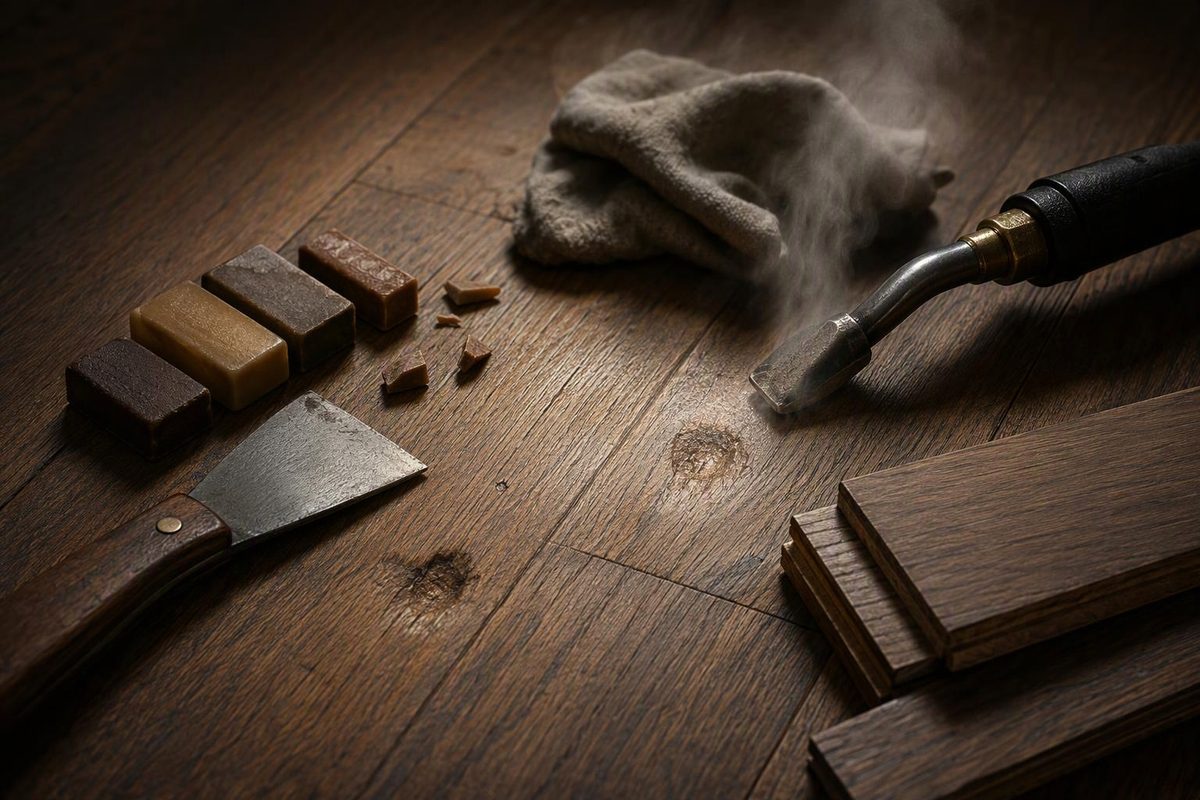
For a small dent in a finished hardwood floor, first check whether the damage is in the finish or the wood—do not start with a hot iron. A finish-only mark may need color or finish repair; a depression may need filling; split wood or extensive damage may justify replacing the board. Steam can lift some dents, but it is not a finish-safe shortcut for every floor.
1. Check what is actually damaged
Remove grit, clean with a product appropriate for the floor’s finish, and let the area dry. The National Wood Flooring Association’s maintenance guidance recommends finish-specific cleaners and advises against wet or steam mops.
Shine a light across the mark and inspect it without digging into it:
| What you observe | Repair direction |
|---|---|
| Scuff or color loss, with little or no depression | Compatible color and finish touch-up |
| A depression with grain still present and no missing chip | Likely compressed wood: consider leaving it, filling it, or professional dent lifting |
| Torn fibers, a missing chip, or a gouge | Fill a small, stable defect; assess replacement for larger damage |
| Split board, damaged joint, or movement underfoot | Have the board and its support assessed before cosmetic repair |
A dip spanning several boards, raised edges, or a soft area should not be treated as a simple impact dent. Stop the surface repair and investigate moisture or movement. For broader damage, start with diagnosing hardwood-floor repair needs.
Also identify the flooring and finish from spare boards, receipts, or product records. Engineered hardwood is real wood, but its top layer limits sanding. Bruce notes that refinishing feasibility depends on that layer’s thickness and the specific floor’s warranty guidance. Solid hardwood can typically be refinished more than once, but that does not make aggressive spot sanding appropriate. Bruce’s flooring FAQs
2. Choose the least disruptive repair
If the dent is shallow, the finish remains intact, and the mark is acceptable in normal room light, leaving it alone avoids enlarging the repair.
For a finish-only mark, use the floor maker’s compatible touch-up system. Do not expect a marker or refresher to raise compressed wood. Kährs distinguishes surface refreshers and touch-up finishes from deeper repairs using hard wax or wood filler before sealing. Those are instructions for its floors, not approval to use the same products on every finish. Kährs repair guidance
For a small depression that needs leveling, choose a repair product explicitly intended for floors and compatible with the existing finish. Mohawk’s Hard Fill technical sheet lists floor repairs and dents among its uses; it is a hard-wax filler, not a liquid finish or structural repair. Filling levels the depression rather than lifting the compressed wood. Mohawk technical data sheet
If you are deciding between a wax repair and a sandable filler, see wood filler choices by repair type.
3. Fill a small dent with a compatible hard-wax system
Gather the repair kit, its specified applicator or melter, leveling tool, clean cloths, and any approved color marker or sealing product. Read the kit’s instructions and safety sheet first. Practice on a spare board before working on a visible floor; assess both color and sheen before committing to the repair.
- Prepare only the damaged area. Remove debris and loose material. Do not cut into an otherwise smooth dent just to create a larger cavity. Follow the kit’s requirements for cleaning and localized scuffing; avoid removing surrounding color or finish.
- Match the background color. Compare shades against the actual floor. Mohawk allows mixing Hard Fill shades. Its application instructions also call for pre-coloring exposed damage with a matching marker to avoid a pale ring around the fill.
- Apply the filler as directed. For Mohawk Hard Fill, the instructions specify melting the stick onto the burn-in knife blade and allowing it to flow into the damage, slightly overfilling. Do not improvise with a household iron. Hard Fill preparation and application instructions
- Level the repair using the kit’s timing and tool instructions. Remove excess filler rather than sanding a wide patch around the dent. Mohawk’s dedicated leveling tool is designed to remove excess wax and level the repair. Leveling tool guidance
- Complete the specified finish treatment. Add a sealing or touch-up coat only when the repair system and floor finish permit it. Do not automatically brush polyurethane over a wax-filled patch. Keep traffic off until the filler has cooled and any specified coating has met its stated return-to-use time.
Stop if preparation starts removing surrounding stain, the finish changes appearance, or the repair cannot be leveled without enlarging the damaged area.
Should you steam the dent out?
There is a legitimate steam-lifting technique. Hardwood Floors Magazine describes penetrating the clear coat, wetting the compressed fibers, then using an iron over a wet cloth. It also warns that the wood can burn if the cloth dries and says not to coat the area until the added water has evaporated. Professional steam-pop method
That is deliberately invasive repair work—not ordinary floor care. In its steam-mop guidance, Bruce warns that introducing heat and moisture may damage its floors. That warning is not an endorsement of localized steam repair. Bruce care guidance
For an installed floor with an intact factory finish, engineered construction, or an unidentified finish, leave steam lifting to a flooring professional who can assess the product and repair the coating afterward. It cannot replace missing wood.
When replacement makes more sense
Ask a flooring repair professional to compare filling with board replacement when the wood is split, a joint is damaged, or the patch would remain conspicuous. Bruce lists board replacement among its repair options and cautions that not all hardwood floors should be sanded. Bruce repair options
Do not try to erase a deep dent by sanding the surrounding floor down to its bottom. For one damaged board, first check whether you can match a replacement hardwood board.