
Hardwood Floor Scuff Repair: Clean First, Then Assess the Finish
Separate rubber transfer from finish damage, remove hardwood floor scuffs gently, and know when touch-up or recoating is the better repair.
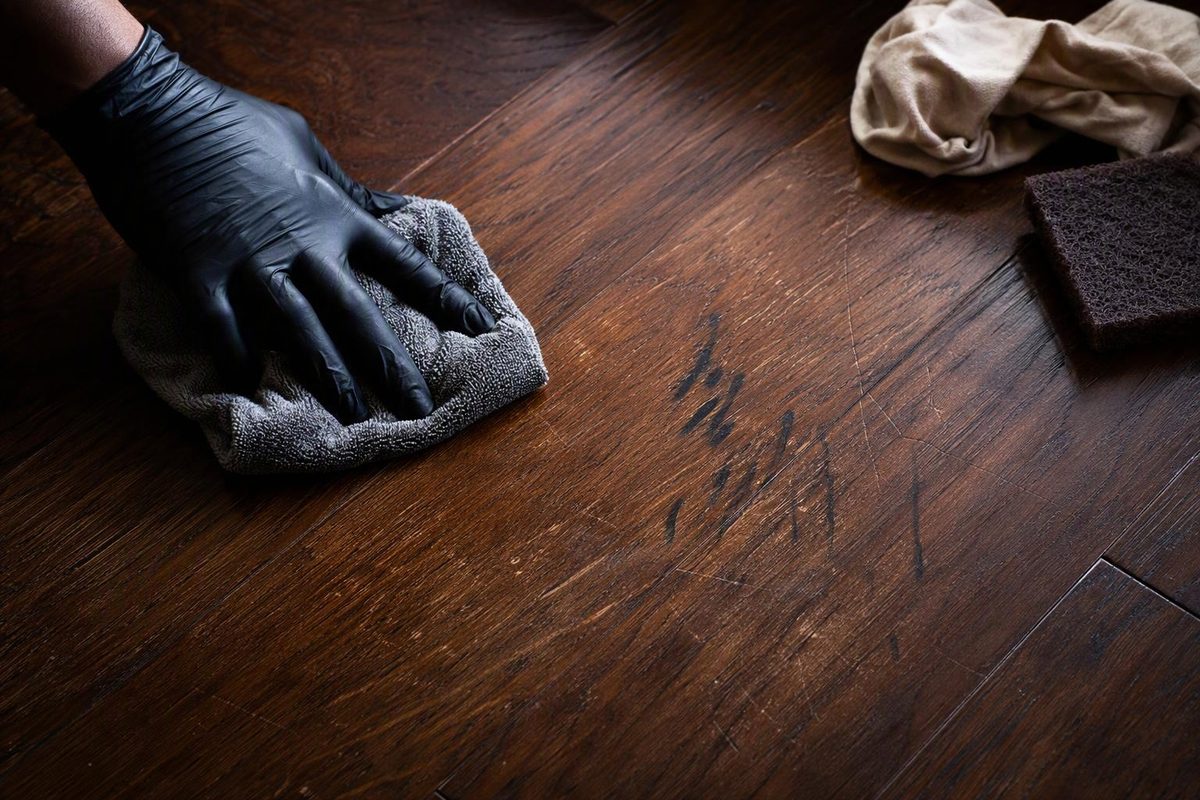
Start hardwood floor scuff repair with cleaning, not sanding. A dark heel mark may be material sitting on an intact coating; a pale scrape or dull patch may be damage to the coating itself. The first needs removal. The second may need a compatible touch-up or recoat.
Bruce’s care instructions make this distinction explicitly: rubber heel marks belong under spot cleaning, while minor abrasions and scratches call for a color-coordinated touch-up product. Those instructions apply to Bruce flooring, not every hardwood finish. (Bruce care and cleaning guide)
Check what the mark actually is
Remove loose grit, then examine the area under daylight and light coming across the floor from the side.
| What you observe | What to try next |
|---|---|
| Dark streak that begins transferring to a cleaning cloth | Continue gentle, finish-compatible spot cleaning |
| Pale line or dull patch that remains after cleaning and drying | Assess for finish abrasion rather than scrubbing harder |
| Groove, missing wood, or visibly exposed wood | Treat it as damage, not a removable scuff |
These are clues, not proof of damage depth. Color alone cannot tell you whether the coating is intact.
Before using a cleaner or repair product, find the flooring or finish instructions. Check leftover cartons, installation paperwork, or the installer’s records. An oil-finished or waxed floor does not necessarily use the same maintenance system as a urethane-coated floor. The National Wood Flooring Association recommends choosing a cleaner specifically for the floor’s finish. (NWFA maintenance guidance)
Remove a surface scuff in this order
You need a soft brush or hard-floor vacuum, two clean soft cloths, and a cleaner approved for the finish.
- Remove grit first. Sweep, dust-mop, or vacuum using the bare-floor setting. Do not rub dirt back and forth over the mark.
- Test the cleaner out of sight. Use the label’s application method in a concealed area. Let it dry and check for a change in color or sheen before treating the visible scuff.
- Spot-clean with a soft cloth. Where the instructions permit, put a small amount of cleaner on the cloth rather than soaking the board. Wipe gently and switch to a clean part of the cloth as residue comes off. Bruce specifies this method for rubber heel marks on its floors. (Bruce cleaning instructions)
- Remove excess liquid and reassess when dry. Follow the cleaner’s directions; do not add a water rinse unless instructed. If the mark is fading without a sheen change, another gentle pass may help. If it stops improving, stop escalating pressure.
Stop immediately if the treated area becomes duller, cloudy, sticky, or visibly different from the surrounding finish. At that point, more cleaning may make the repair larger.
For a stubborn rubber mark, consult the flooring manufacturer’s next-step instructions. Bruce permits odorless mineral spirits after its cleaner, followed by cleaning again—but that is not blanket approval for an unidentified floor. Do not improvise with solvents; any approved use also requires following the solvent label’s safety precautions.
Avoid turning a scuff into a finish repair
Do not start with sandpaper, a scouring pad, a melamine cleaning sponge, baking-soda paste, or aggressive buffing. Until you know whether the mark is residue or coating damage, keep the treatment nonabrasive.
Also avoid vinegar, oil soap, wax, or “restore the shine” products unless your floor’s maintenance system specifically calls for them. Bruce warns that several such products can etch its finish or interfere with later maintenance. NWFA advises against wet and steam mops. (Bruce product cautions, NWFA maintenance guidance)
For routine care after the mark is gone, use our guide to cleaning hardwood without damaging the finish.
If cleaning reveals damage
For a small abrasion, a manufacturer-approved touch-up pen or kit may reduce the visible color contrast. It is not a substitute for a broader finish repair.
For widespread dullness or superficial wear, ask a flooring professional whether the floor is a candidate for recoating. NWFA describes recoating as renewal through an additional coat of wood-floor finish. (NWFA maintenance guidance) Review the checks before screening and recoating, rather than sanding one conspicuous patch by guesswork. If the damage exposes bare wood, ask about a repair that addresses both the wood’s appearance and its protective finish—not simply a color touch-up.
If wood is missing, switch to gouge repair. Filler has no useful role in removing a mark sitting on an intact finish.
Before returning furniture to the area, inspect its floor protectors and replace damaged ones. Keep protectors clean, and lift rather than drag furniture to reduce the risk of another mark.